Login
Login
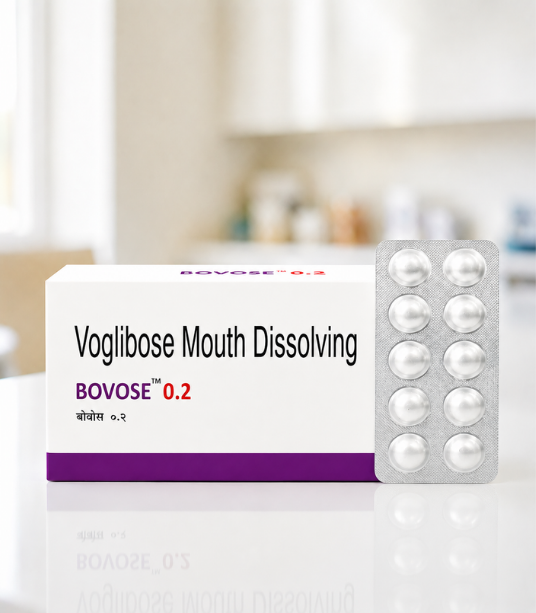
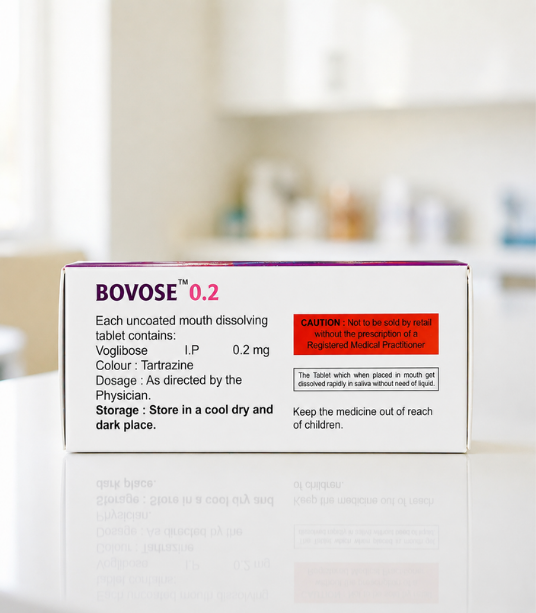
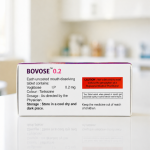
BOVOSE 0.2
BOVOSE 0.2 (Voglibose 0.2 mg Mouth Dissolving) is an oral antidiabetic medication used primarily to control post-prandial hyperglycemia—the rapid spike in blood sugar that occurs immediately after eating.
Unlike many other diabetes drugs that work on the pancreas or liver, Voglibose works entirely within the small intestine. The “Mouth Dissolving” (or Orally Disintegrating) format offers specific advantages for timing and convenience.
1. Mechanism of Action (The “Sugar Blocker”)
Voglibose belongs to a class of drugs called Alpha-Glucosidase Inhibitors (AGIs).
- The Enzyme Target: In your small intestine, an enzyme called alpha-glucosidase breaks down complex carbohydrates (disaccharides and polysaccharides) into simple sugars like glucose.
- The Action: Voglibose competitively inhibits this enzyme. By “distracting” the enzyme, it slows down the breakdown of carbohydrates.
- The Result: Glucose is absorbed much more slowly into the bloodstream. Instead of a sharp “mountain” peak of sugar after a meal, you get a lower, flatter “hill.” This reduces the workload on your pancreas to produce a sudden burst of insulin.
2. The “Mouth Dissolving” (MD) Advantage
The MD formulation is specifically designed for the unique lifestyle requirements of managing mealtime sugar:
- Rapid Disintegration: The tablet dissolves on the tongue within seconds without the need for water.
- Precision Timing: Because it must be present in the intestine at the exact moment the first bite of food arrives, the MD format allows patients to take the dose discreetly and quickly right as they sit down to eat.
- Improved Compliance: It is ideal for patients who have difficulty swallowing tablets (dysphagia) or those who are frequently on the go.
3. Dosage and Administration
The effectiveness of Voglibose is entirely dependent on when it is taken.
- The “First Bite” Rule: It should be taken immediately before each major meal (breakfast, lunch, and dinner). If taken 30 minutes before or after the meal, its effectiveness is significantly reduced because the enzymes will have already started breaking down the food.
- No Water Needed: Place the tablet on the tongue, allow it to dissolve, and swallow the saliva.
4. Unique Benefits
- Weight Neutrality: Voglibose does not typically cause weight gain.
- Low Hypoglycemia Risk: When used alone (monotherapy), Voglibose almost never causes “low blood sugar” because it doesn’t force the pancreas to make insulin; it simply slows down sugar absorption.
- Cardiovascular Safety: By smoothing out post-meal sugar spikes, it is thought to reduce oxidative stress on blood vessels, which is beneficial for heart health.
5. Potential Side Effects (The “Intestinal” Focus)
Because Voglibose prevents carbohydrates from being absorbed quickly in the upper intestine, some of those sugars travel further down into the large intestine, where they are fermented by natural gut bacteria.
- Common: Flatulence (gas), bloating, and abdominal whistling (borborygmus).
- Less Common: Diarrhea or soft stools.
- Note: These symptoms usually decrease over time as the digestive system adapts to the medication.
6. Important Warning: Treating “Lows”
If you are taking Voglibose in combination with other medications (like Gliclazide or Insulin) and you experience a “sugar crash” (hypoglycemia):
- You MUST use pure Glucose (Dextrose) tablets or powder.
- Why? Because Voglibose blocks the breakdown of table sugar (sucrose) and starchy snacks, eating a candy bar or drinking regular soda will not raise your blood sugar fast enough to save you. Pure glucose bypasses the blocked enzyme and enters the blood immediately.
7. Contraindications
Voglibose is generally avoided in patients with:
- Chronic Intestinal Diseases: Such as Inflammatory Bowel Disease (IBD) or intestinal obstruction, as the gas production can worsen these conditions.
- Severe Hernias: Due to increased intestinal pressure from gas.
- Severe Kidney or Liver Impairment: Though the drug is poorly absorbed into the blood, it is still used with caution in these groups.