Login
Login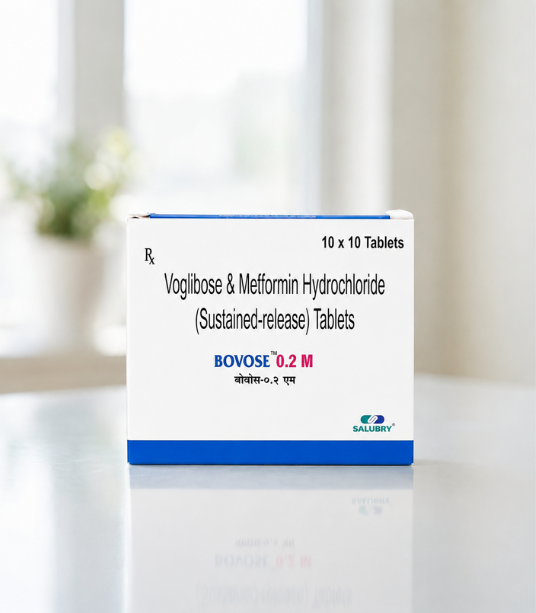
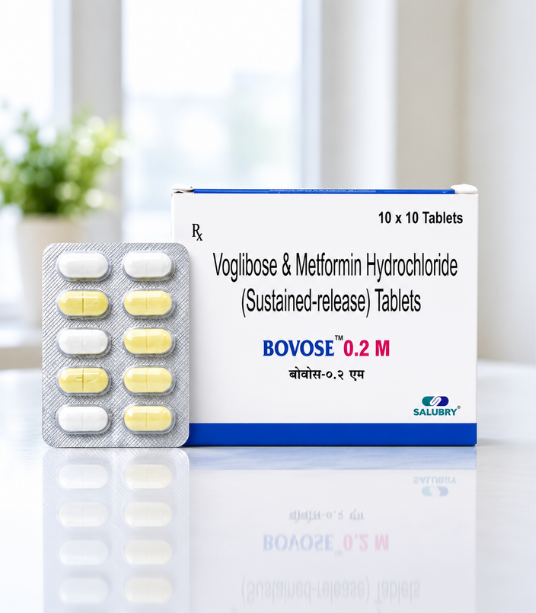
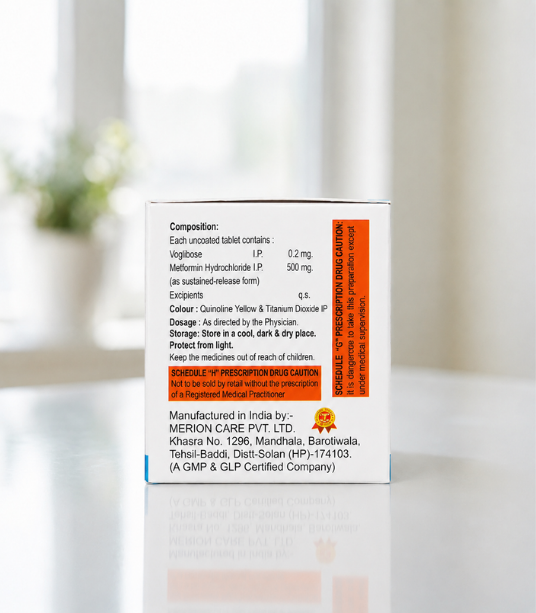
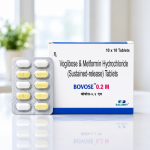
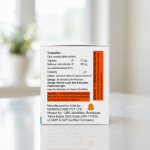

BOVOSE 0.2 M
BOVOSE 0.2M (Voglibose 0.2 mg + Metformin 500 mg SR) is a dual-action oral antidiabetic combination used to manage Type 2 Diabetes Mellitus. This specific formulation is often used as a starting point for combination therapy or for patients who require moderate control over both their fasting and post-meal blood sugar levels.
By pairing an Alpha-Glucosidase Inhibitor (Voglibose) with a Biguanide (Metformin), the medication targets the disease from two different physiological angles.
1. Mechanism of Action: The Dual-Path Strategy
This medication works by addressing the two biggest hurdles in diabetes management: the “sugar spike” after eating and the body’s “insulin resistance.”
Voglibose (0.2 mg) — The “Carb-Absorption Delayer”
- Action: Voglibose works locally in the small intestine. It inhibits the enzymes (alpha-glucosidases) that break down complex carbohydrates and starches into simple glucose.
- Result: Because the breakdown of food is slowed down, glucose enters the bloodstream more gradually. This prevents the sharp “post-prandial” spike in blood sugar that typically occurs 30 to 60 minutes after a meal.
- The 0.2 mg Factor: This is the lower, “starter” dose of Voglibose, often chosen to minimize initial digestive side effects while still providing significant meal-time control.
Metformin (500 mg SR) — The “Metabolic Foundation”
- Action: Metformin works primarily on the liver and the muscles. It tells the liver to stop producing unnecessary glucose and helps the body’s cells become more sensitive to insulin.
- The “SR” (Sustained Release) Advantage: The 500 mg dose is engineered in a slow-release matrix. Instead of dissolving all at once, it releases gradually over 12–24 hours. This provides a steady level of glucose control throughout the day and night and is much gentler on the stomach than standard Metformin.
2. Why This Combination?
The synergy between these two drugs offers a “total daily coverage” profile:
- Voglibose: manages the “peaks” (the sugar spikes caused by the food you just ate).
- Metformin: manages the “baseline” (the sugar your body produces while you sleep or are between meals).
- Weight Neutrality: Both drugs are considered “weight-neutral,” meaning they generally do not cause the weight gain often associated with other diabetes medications like sulfonylureas or insulin.
3. Administration and Timing
To get the full benefit of this medication, timing is essential:
- The “First Bite” Rule: This tablet should be taken immediately before a meal (usually the largest meal of the day, like breakfast or dinner).
- Swallow Whole: You must never crush, chew, or break the tablet. Doing so destroys the Sustained Release (SR) mechanism, causing the Metformin to hit your system too fast, which can lead to severe diarrhea and stomach cramps.
- Consistency: Taking it at the same mealtime every day helps maintain a steady state of glucose control.
4. Potential Side Effects
Most side effects are gastrointestinal (GI) and tend to improve after the first two weeks.
- Common GI Issues: Flatulence (gas), bloating, abdominal “rumbling,” and soft stools. This happens because the undigested carbohydrates (delayed by Voglibose) reach the lower gut, where natural bacteria ferment them.
- Metallic Taste: Metformin can occasionally leave a metallic taste in the mouth.
- Vitamin B12 Deficiency: Long-term use of Metformin can sometimes interfere with Vitamin B12 absorption. Doctors may occasionally check these levels.
5. The “Glucose Only” Safety Rule
If you are taking this medication and feel symptoms of hypoglycemia (low blood sugar), such as shakiness, cold sweats, or dizziness:
You MUST treat it with pure GLUCOSE (Dextrose) tablets or powder.
Standard candy, table sugar (sucrose), or fruit juice will not work quickly enough. Because the Voglibose in your system is actively blocking the enzymes that break down regular sugar, your body cannot process that candy fast enough to save you in an emergency. Only pure glucose can bypass those enzymes and enter your bloodstream immediately.
6. Important Warnings
- Kidney Health: Metformin is cleared by the kidneys. Your doctor will monitor your kidney function (eGFR) periodically.
- Alcohol: Avoid heavy drinking. Alcohol increases the risk of both low blood sugar and a rare but dangerous condition called Lactic Acidosis.
- Medical Procedures: If you need surgery or a CT scan with “contrast dye,” you must inform your doctor. You will likely need to stop the medication for 48 hours to prevent kidney stress.