Login
Login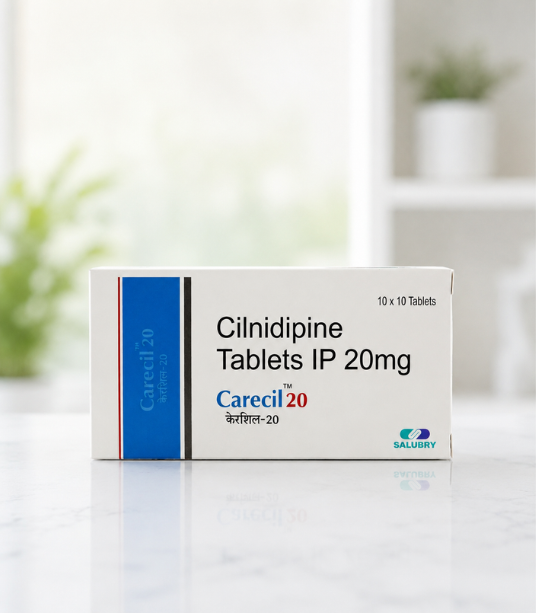
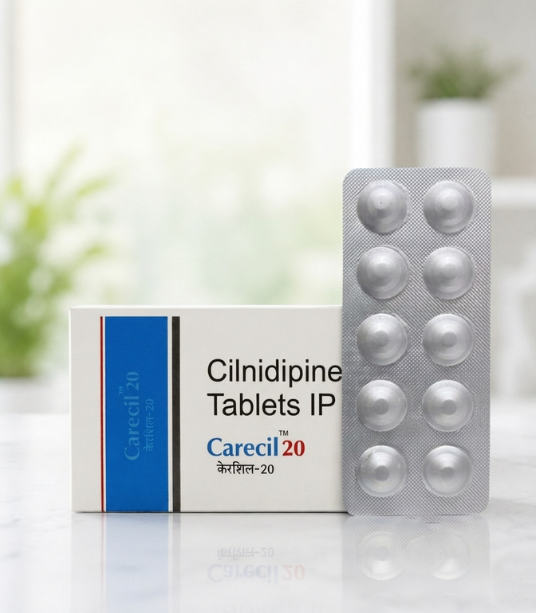
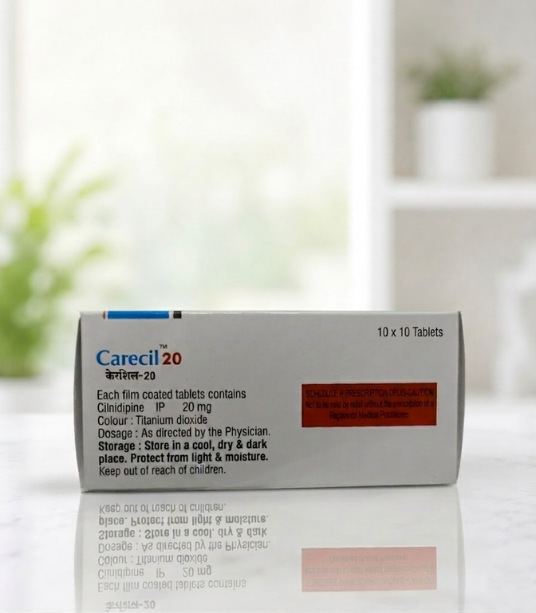



Carecil 20
CARECIL 20 (Cilnidipine 20mg ) is a high-potency, fourth-generation Calcium Channel Blocker (CCB). While the 5mg and 10mg doses are often used for initiation, the 20mg strength is typically utilized for patients with more resistant hypertension or those who require intensive blood pressure management to prevent cardiovascular complications.
What sets Cilnidipine 20mg apart from other high-dose blood pressure medications is its unique dual-channel blockade, which targets both the vascular system and the sympathetic nervous system.
1. Advanced Dual Mechanism of Action
The “Deep Description” of Cilnidipine involves its action on two distinct calcium channels:
L-type Channel Blockade (Vascular Power)
Like most CCBs, it blocks L-type calcium channels in the smooth muscles of the arteries. This prevents calcium from entering the cells, causing the blood vessels to relax and widen. This significantly lowers peripheral vascular resistance—the “resistance” your heart must pump against.
N-type Channel Blockade (Neurological Control)
Unlike Amlodipine or Nifedipine, Cilnidipine also blocks N-type calcium channels found at the ends of sympathetic nerves.
- The Benefit: It suppresses the release of norepinephrine (noradrenaline).
- The Result: It prevents the “stress-induced” spikes in blood pressure and heart rate that many patients experience.
2. Clinical Advantages of the 20mg Dose
At the 20mg level, several clinical benefits become more pronounced:
- Superior Edema Control: High doses of traditional CCBs often cause significant ankle swelling (pedal edema). Because Cilnidipine 20mg dilates both the arteries (incoming) and the veins (outgoing) by suppressing the sympathetic nervous system, fluid is less likely to leak into the tissues, making it a “cleaner” high-dose option
- Kidney Protection (Renoprotection): It dilates both the afferent and efferent arterioles in the kidneys. This lowers the pressure within the filtering units (glomeruli), which helps prevent kidney damage in hypertensive patients.
- Morning Surge Control: Because of its long-acting profile and N-type blockade, it is highly effective at controlling the “morning surge” of blood pressure, which is when the risk of stroke and heart attack is highest.
3. Potential Side Effects
While well-tolerated, the 20mg dose increases the concentration of the drug, which may lead to:
- Dizziness & Flushing: Due to the potent widening of blood vessels.
- Headache: Usually mild and tends to disappear after a few days as the body adapts.
- Gastrointestinal Issues: Occasional nausea or abdominal discomfort.
- Hypotension: At 20mg, blood pressure must be monitored closely to ensure it doesn’t drop too low, especially when standing up quickly.
4. Critical Precautions
- The “Grapefruit Rule”: Grapefruit juice inhibits the CYP3A4 enzyme. At a 20mg dose, drinking grapefruit juice can cause the drug levels to skyrocket, leading to dangerously low blood pressure.
- Liver Function: Because it is primarily processed by the liver, patients with hepatic impairment should use the 20mg dose with extreme caution.
- Heart Failure: While it doesn’t cause the “reflex tachycardia” (racing heart) common in other CCBs, it should be used carefully in patients with severe congestive heart failure.
5. Administration Summary
- Timing: Usually taken once daily after breakfast.
- Consistency: It is vital to take it at the same time every day to maintain a steady “steady-state” concentration in the blood.
- Monitoring: Patients on the 20mg dose should keep a log of their home blood pressure readings to ensure the dosage is providing optimal control without over-correction.
Medical Disclaimer: This description is for educational and technical information. Cilnidipine 20mg is a potent cardiovascular drug. Never start, stop, or change your blood pressure medication without the direct supervision of a healthcare professional.