Login
Login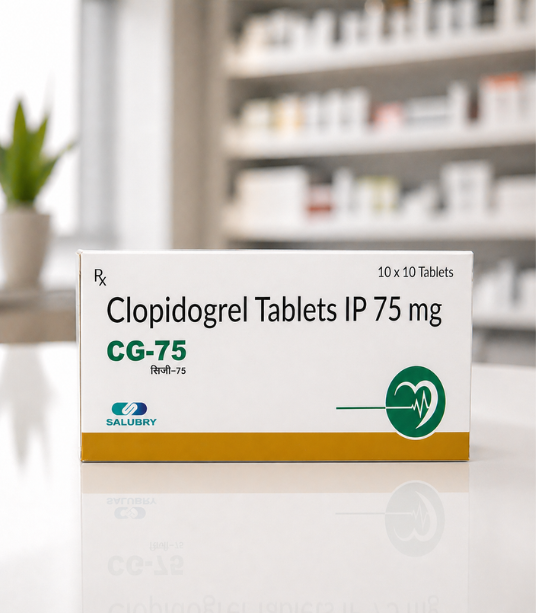
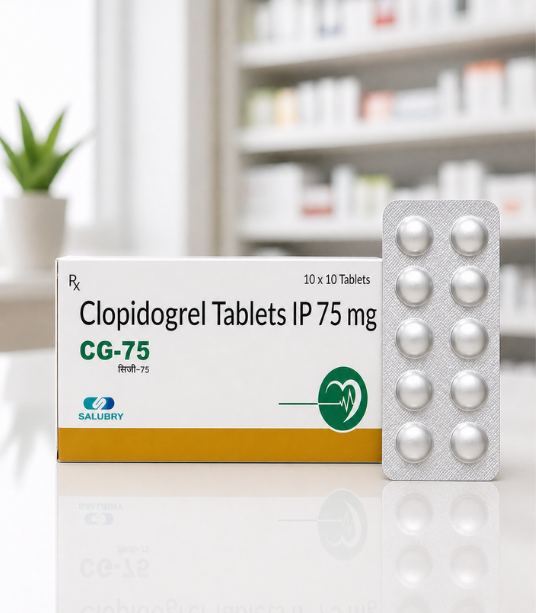
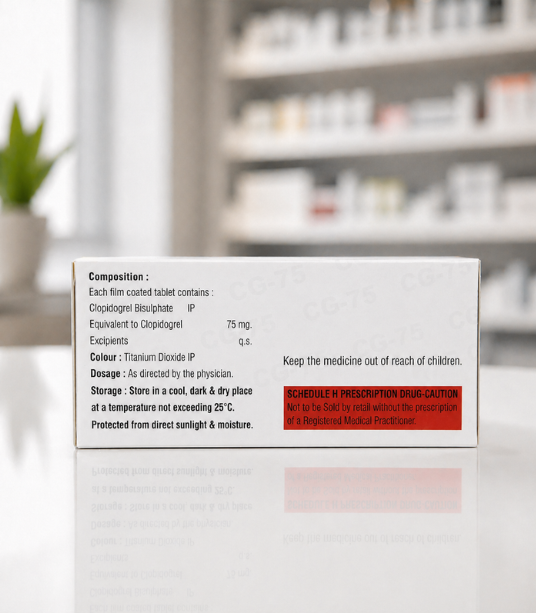
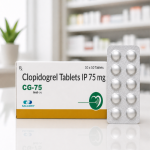

CG 75
CG 75 (Clopidogrel 75mg) is a potent antiplatelet medication belonging to the thienopyridine class. Often referred to as a “blood thinner” (though it does not actually thin the blood, but rather makes it less “sticky”), it is a cornerstone therapy for preventing atherothrombotic events, such as heart attacks and strokes, in high-risk patients.
The 75mg strength is the standard, worldwide maintenance dose for long-term cardiovascular protection.
1. Molecular Mechanism: The P2Y12 Blockade
Clopidogrel is a prodrug, meaning it has no antiplatelet effect when you first swallow it. It must be activated by the liver to work.
- Activation: Once ingested, about 15% of the dose is processed by liver enzymes (specifically CYP2C19) into its active thiol metabolite.
- The Target: This active metabolite moves into the bloodstream and binds irreversibly to the P2Y12 receptor on the surface of platelets.
- The Inhibition: Platelets use the P2Y12 receptor to sense ADP (Adenosine Diphosphate), the “chemical signal” that tells them to clump together to form a clot. By blocking this receptor, Clopidogrel ensures the platelets cannot receive the “clump” signal.
- Irreversible Action: Because the bond is irreversible, the affected platelets are “disabled” for the rest of their lifespan (approximately 7 to 10 days).
2. Clinical Indications
The 75mg daily dose is primarily used in three major scenarios:
- Recent Stroke or Heart Attack: To prevent a secondary, often more severe, event.
- Peripheral Arterial Disease (PAD): To improve blood flow in patients with narrowed arteries in the legs.
- Post-Stent Placement (DAPT): Often used in Dual Antiplatelet Therapy alongside Aspirin to prevent a clot from forming inside a newly placed coronary stent.
3. Potential Side Effects
The primary risk associated with “disabling” platelets is an increased tendency to bleed.
- Bruising & Bleeding: Minor cuts may take longer to stop bleeding. You may notice “purpura” (purple spots) or easy bruising.
- Gastrointestinal Upset: Diarrhea, abdominal pain, or indigestion.
- Serious Bleeding (Rare): Nosebleeds that won’t stop, blood in the stool (black/tarry stools), or blood in the urine.
- TTP (Extremely Rare): Thrombotic Thrombocytopenic Purpura, a serious blood condition characterized by low platelet counts and red blood cell breakdown.
4. Critical Precautions & Interactions
- The “Poor Metabolizer” Genetic Link: Some people have a genetic variation in their CYP2C19 enzyme that prevents them from converting Clopidogrel into its active form. For these “poor metabolizers,” Clopidogrel 75mg may be less effective, and doctors may suggest alternative drugs.
- The PPI Interaction: Common heartburn medications (Proton Pump Inhibitors) like Omeprazole or Esomeprazole can block the enzyme that activates Clopidogrel. This can make the 75mg dose much less effective. Pantoprazole is generally considered a safer alternative if an acid-blocker is needed.
- Surgery/Dental Work: Because the effect lasts 7–10 days, patients usually must stop taking Clopidogrel 5 to 7 days before surgery to prevent excessive bleeding. Never stop this medication before surgery without consulting your cardiologist.
- NSAIDs: Taking Ibuprofen or Naproxen with Clopidogrel significantly increases the risk of stomach ulcers and internal bleeding.
5. Administration Summary
- Consistency: Take it at the same time every day to maintain a steady level of platelet inhibition.
- With or Without Food: It can be taken regardless of meals.
- Monitoring: While no routine “blood thinning” test (like the INR for Warfarin) is required, doctors will monitor your complete blood count (CBC) and look for signs of unusual bleeding.
Medical Disclaimer: This description is for educational purposes only. Clopidogrel is a high-stakes medication used to prevent life-threatening clots. Always take it exactly as prescribed by your doctor and report any unusual bleeding or bruising immediately.