Login
Login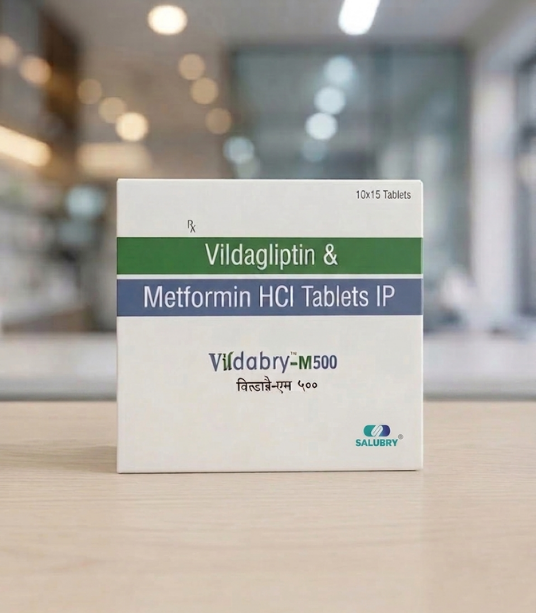
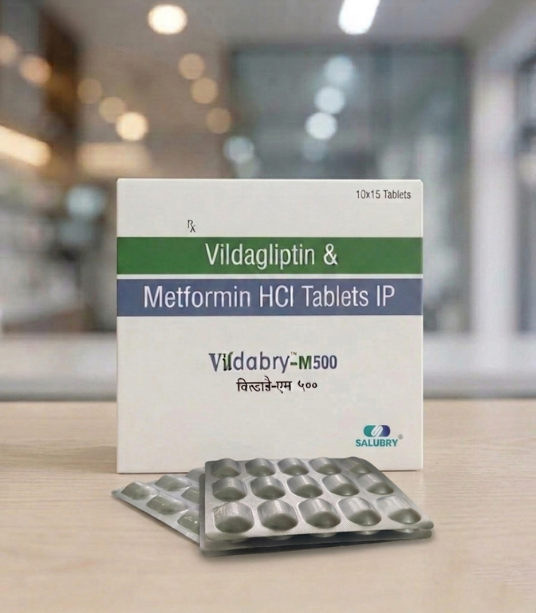
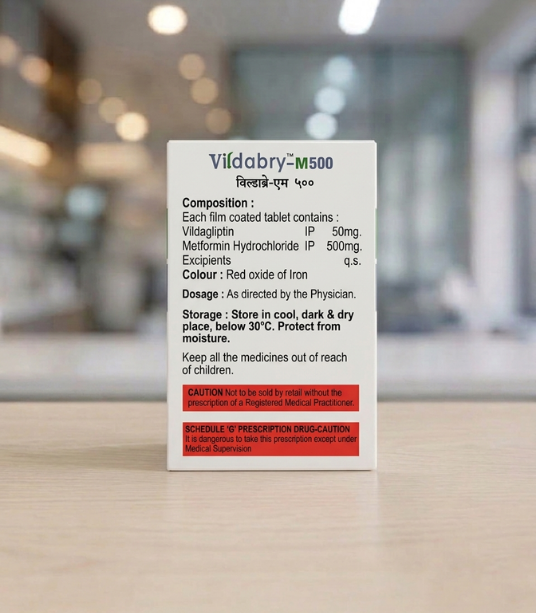



Vildabry M 500
The combination of VILDABRY M500 (Vildagliptin 50mg and Metformin 500mg) is a potent, dual-action oral medication designed to treat Type 2 Diabetes. This combination is particularly effective because it targets two distinct physiological defects: it improves the way the body secretes insulin and simultaneously reduces the body’s resistance to that insulin.
1. Dual-Path Mechanism of Action
This “fixed-dose combination” (FDC) uses a synergistic approach, meaning the two drugs work better together than either does alone.
Vildagliptin 50mg (The Incretin Enhancer)
- Mechanism: It is a DPP-4 inhibitor. It blocks the enzyme responsible for breaking down “incretin” hormones (GLP-1 and GIP).
- Result: Incretin levels stay high, signaling the pancreas to produce more insulin and the liver to produce less glucagon. This action is glucose-dependent, meaning it primarily activates when your blood sugar is high (like after a meal).
Metformin 500mg (The Insulin Sensitizer)
- Mechanism: It belongs to the biguanide class. It primarily works in the liver and muscles.
- Result: It stops the liver from pumping out unnecessary glucose into the blood and helps your muscle cells become more “sensitive” so they can absorb sugar more easily. It also slightly delays sugar absorption in the intestines.
2. Clinical Rationale for This Strength
The 50mg / 500mg dosage is often the standard starting point for combination therapy.
- Complementary Action: While Vildagliptin handles the “post-meal” spikes, Metformin works around the clock to manage “fasting” blood sugar.
- Gastrointestinal Tolerance: Starting with 500mg of Metformin (rather than 850mg or 1000mg) helps the digestive system adjust to the medication, reducing the risk of nausea or diarrhea.
- Weight Profile: This combination is generally considered weight-neutral, making it an excellent choice for patients who want to avoid the weight gain often associated with other diabetes drugs like sulfonylureas or insulin.
3. Notable Side Effects
Most side effects are mild and tend to diminish as the body adapts to the Metformin.
- Digestive Issues: Diarrhea, nausea, gas, or abdominal pain (primarily from the Metformin component).
- Hypoglycemia: The risk is very low when these two are used together, as neither drug forces insulin release when blood sugar is already normal.
- Dizziness/Headache: Occasionally reported during the first few weeks of treatment.
- Metallic Taste: A common but harmless side effect of Metformin.
4. Critical Precautions & Monitoring
- Liver Function: Because Vildagliptin has been associated with rare liver enzyme elevations, doctors typically perform a Liver Function Test (LFT) before starting and periodically during the first year of treatment.
- Kidney Health: Metformin is cleared by the kidneys. If kidney function (eGFR) drops significantly, the dose may need to be adjusted or stopped.
- Alcohol: Excessive alcohol consumption should be avoided, as it can increase the risk of a rare but serious condition called lactic acidosis (linked to Metformin).
- Vitamin B12: Long-term use of Metformin can lower B12 absorption; doctors may check these levels annually.
5. Storage & Care
- Store at room temperature (20°C to 25°C).
- Protect from moisture and heat. Metformin tablets can sometimes develop a distinct odor if exposed to humidity; this is usually normal but should be kept in a dry place.
Medical Disclaimer: This description is for educational purposes. This combination medication requires a prescription and careful monitoring by a healthcare provider to ensure it is safe for your specific liver and kidney profile.