Login
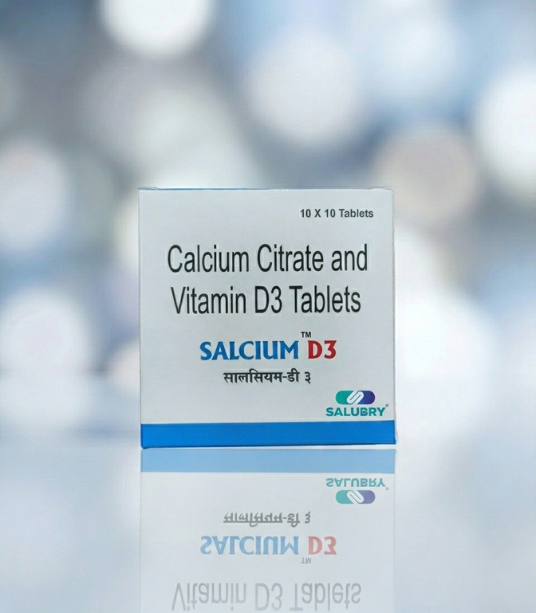



SALCIUM D3
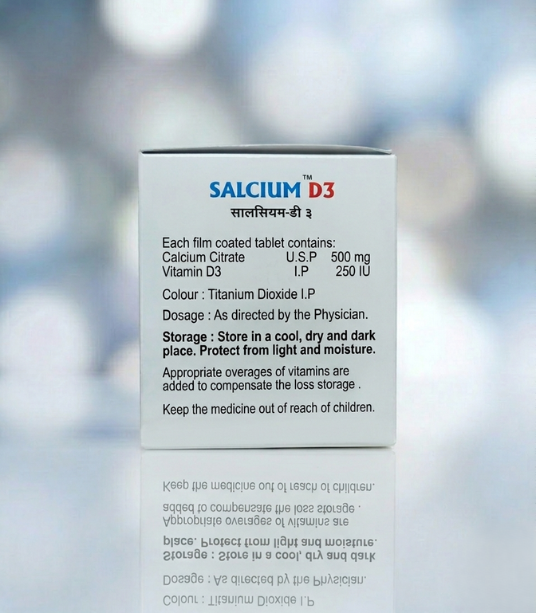
SALCIUM D3 (Calcium Citrate 500mg and Vitamin D3 (Cholecalciferol) 250 IU (often referred to as 6.25mcg) is a synergistic mineral-vitamin combination designed for optimal bone density and metabolic support.
This specific pairing is highly effective because Vitamin D3 acts as the “key” that unlocks the body’s ability to absorb calcium. The use of the Citrate salt of calcium makes this formulation particularly versatile compared to more common versions like Calcium Carbonate.
1. The “Citrate” Advantage
Calcium Citrate is often preferred over other forms of calcium for several physiological reasons:
- Acid-Independent Absorption: Unlike Calcium Carbonate, which requires stomach acid to dissolve, Calcium Citrate is absorbed equally well with or without food. This makes it the superior choice for older adults (who may have lower stomach acid) or those taking acid blockers (PPIs like Pantoprazole).
- Lower GI Side Effects: It is generally associated with less gas, bloating, and constipation than other calcium salts.
- Reduced Stone Risk: Evidence suggests that Citrate may help inhibit the formation of calcium oxalate crystals, making it a slightly safer option for individuals prone to kidney stones.
2. Dual-Action Mechanism
The relationship between these two components is one of the most critical pairings in human nutrition:
Calcium Citrate 500mg (The Structural Element)
- Mineralization: Approximately 99% of the body’s calcium is stored in the bones and teeth. The 500mg dose provides the raw material necessary to maintain the “bone matrix.”
- Systemic Functions: Beyond bones, calcium ions ($Ca^{2+}$) are vital for muscle contraction, blood clotting, and the transmission of electrical signals in the nervous system.
Vitamin D3 250 IU (The Absorption Catalyst)
- Active Transport: Vitamin D3 is converted by the liver and kidneys into its active form, Calcitriol. Calcitriol stimulates the production of calcium-binding proteins in the small intestine.
- The Bridge: Without sufficient D3, the body can only absorb about 10% to 15% of dietary calcium; with D3, that absorption rate increases to 30% to 40%.
- Bone Remodeling: D3 regulates the balance between osteoblasts (cells that build bone) and osteoclasts (cells that break it down).
3. Clinical Indications
This 500mg/250 IU combination is typically used for:
- Osteoporosis and Osteopenia: To slow bone loss and reduce fracture risk.
- Hypocalcemia: Treating low blood calcium levels.
- Pregnancy & Lactation: To support fetal skeletal development without depleting the mother’s own stores.
- Post-Menopausal Support: To counter the rapid decline in bone density caused by decreased estrogen.
4. Pharmacokinetics
| Feature | Details |
|---|---|
| Absorption | Absorbed throughout the small intestine; Vitamin D3 enhances this via active transport. |
| Peak Plasma | Calcium levels usually peak within 2 to 4 hours post-ingestion. |
| Metabolism | Vitamin D3 undergoes two hydroxylations: first in the liver, then in the kidneys. |
| Excretion | Primarily excreted through feces (unabsorbed) and urine (excess). |
5. Potential Side Effects
While generally well-tolerated at this dose, some users may experience:
- Gastrointestinal: Mild constipation, though less likely than with other calcium forms.
- Hypercalcemia: Excessive intake can lead to too much calcium in the blood, causing nausea, thirst, or frequent urination.
- Kidney Stones: Though the risk is lower with Citrate, high supplemental intake over a long period can contribute to stone formation in susceptible individuals.
6. Critical Precautions & Interactions
- The “Absorption Cap”: The body cannot efficiently absorb more than 500mg to 600mg of calcium at one time. If you are prescribed a higher total daily dose, it should be split throughout the day.
- Drug Interference: Calcium can bind to other medications and prevent their absorption. It should be taken at least 2 to 4 hours apart from:
- Antibiotics (Tetracyclines and Quinolones).
- Bisphosphonates (Alendronate)..
- Thyroid Medication (Levothyroxine).
- Thiazide Diuretics: Taking calcium with “water pills” like Hydrochlorothiazide can increase the risk of hypercalcemia.
7. Administration Guidelines
- Timing: Can be taken any time of day, with or without food.
- Hydration: Drink plenty of water to support kidney function and prevent constipation.
- Consistency: Bone health is a long-term process; supplements are most effective when taken daily and combined with weight-bearing exercise.
Medical Disclaimer: This description is for educational purposes. While Calcium and Vitamin D3 are available over-the-counter, the 500mg/250 IU dose should be used as part of a supervised health plan. Always consult your healthcare provider to ensure this supplement is appropriate for your specific needs.