Login
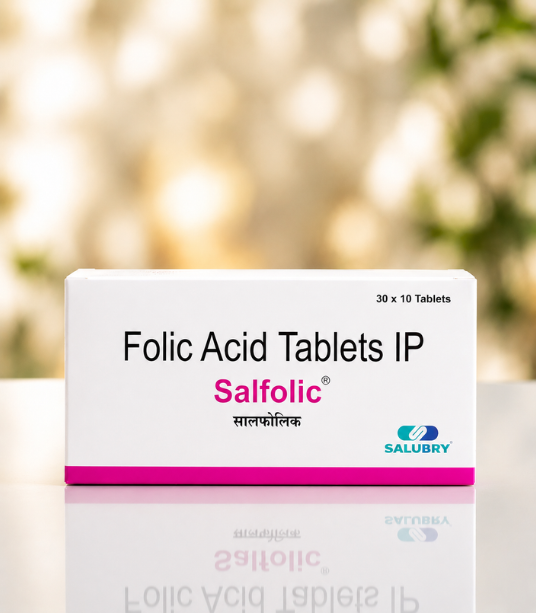
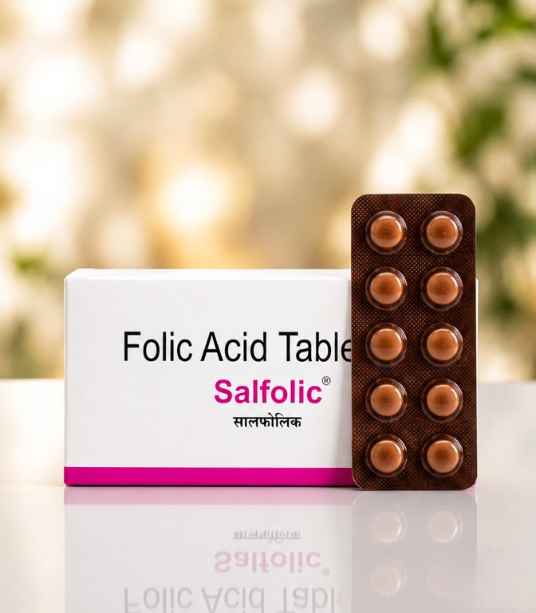
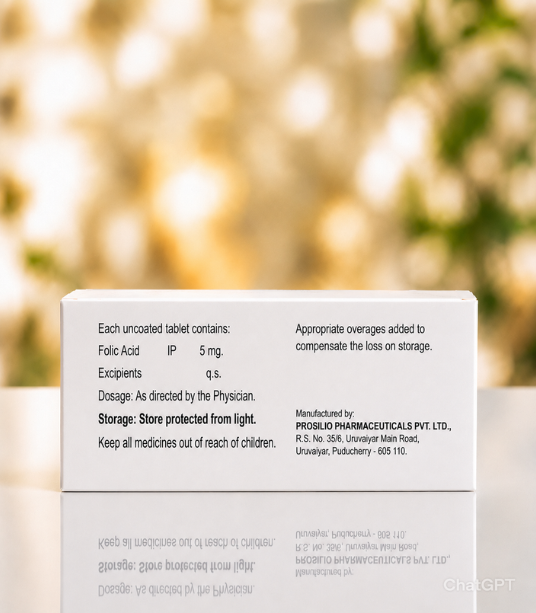

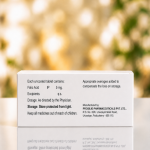

Salfolic
SALFOLIC (Folic Acid 5mg ) is a high-dose formulation of Vitamin $B_9$, a water-soluble vitamin essential for DNA synthesis, amino acid metabolism, and the formation of red blood cells. While the standard daily requirement for a healthy adult is typically measured in micrograms (mcg), the 5mg strength is a therapeutic “mega-dose” used to treat specific medical deficiencies and high-risk conditions.
1. Molecular & Biological Mechanism
Folic acid itself is a precursor. Once ingested, it must undergo a complex biochemical transformation to become biologically active:
- The Conversion: In the liver and digestive tract, folic acid is converted into Dihydrofolate, then into Tetrahydrofolate ($THF$), and finally into 5-Methyltetrahydrofolate ($5-MTHF$).
- DNA Synthesis: As a co-enzyme, $5-MTHF$ is critical for the synthesis of purines and pyrimidines—the “building blocks” of DNA. This makes it vital for any tissue that undergoes rapid cell division (like bone marrow or a developing fetus).
- The Homocysteine Cycle: Folic acid helps convert homocysteine (a potentially toxic amino acid) into methionine. High levels of homocysteine are linked to an increased risk of blood clots, heart disease, and stroke.
2. Clinical Indications for the 5mg Dose
The 5mg dose is significantly higher than over-the-counter supplements (which usually range from 400mcg to 800mcg). It is prescribed for:
- Megaloblastic Anemia: A condition where the bone marrow produces unusually large, structurally abnormal, immature red blood cells (megaloblasts) that cannot carry oxygen efficiently.
- High-Risk Pregnancy: Specifically for women with a previous history of Neural Tube Defects (NTDs) or those on certain medications (like anti-epileptics) to prevent conditions like spina bifida in the fetus.
- Methotrexate Support: Often prescribed to patients taking Methotrexate (for rheumatoid arthritis or psoriasis) to reduce the drug’s toxic side effects on healthy cells.
- Malabsorption Syndromes: Used for patients with Celiac disease, Crohn’s disease, or those recovering from gastric bypass surgery who cannot absorb vitamins efficiently from food.
3. Pharmacokinetics
| Feature | Details |
|---|---|
| Absorption | Primarily absorbed in the proximal small intestine (duodenum and jejunum). |
| Peak Plasma Time | Reached within 30 to 60 minutes. |
| Storage | Primarily stored in the liver, though the body has limited capacity; excess is excreted. |
| Excretion | Amounts exceeding the body’s daily needs are excreted unchanged in the urine. |
4. Potential Side Effects
Folic acid 5mg is generally exceptionally safe, as it is a water-soluble vitamin. However, high doses can occasionally cause:
- Digestive Issues: Nausea, bloating, or flatulence.
- Neurological: Bitter taste in the mouth, sleep disturbances, or irritability.
- Hypersensitivity: In very rare cases, an allergic reaction (rash, itching, or redness).
Critical Precautions: The “Vitamin B12 Mask”
The most important “deep” detail regarding Folic Acid 5mg is its relationship with Vitamin $B_{12}$:
- The Danger: High doses of folic acid can correct the blood-related symptoms of a $B_{12}$ deficiency (anemia) while allowing the neurological damage caused by the $B_{12}$ deficiency to continue unnoticed.
- The Result: This can lead to permanent nerve damage. Doctors will almost always check a patient’s $B_{12}$ levels before starting a long-term 5mg folic acid regimen.
6. Administration Summary
- Consistency: Can be taken with or without food.
- Alcohol: Chronic alcohol consumption severely interferes with the absorption and metabolism of folic acid, often leading to deficiency.
- Drug Interactions: Folic acid can reduce the effectiveness of certain anti-seizure medications (like Phenytoin) and may interact with Pyrimethamine (used for malaria).
Medical Disclaimer: This description is for educational purposes. Folic Acid 5mg is a therapeutic dose that should only be used under the direction of a healthcare professional, especially during pregnancy or when treating anemia.