Login
Login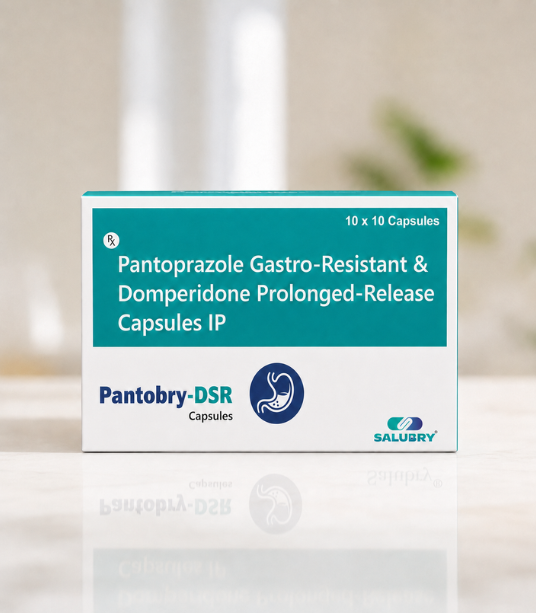
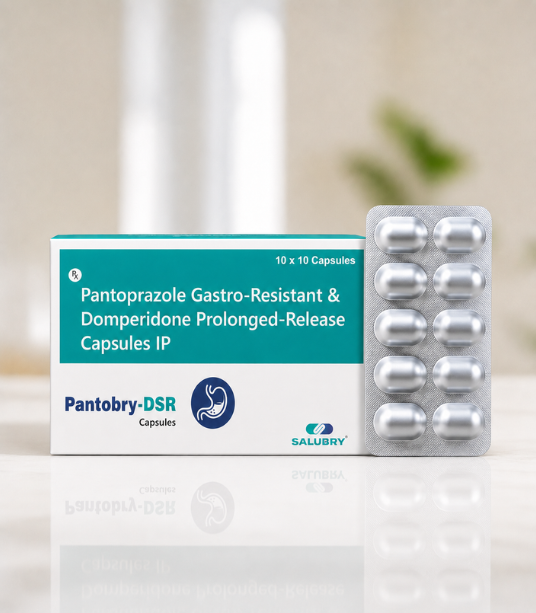

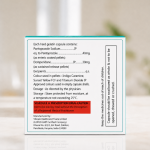

Pantobry DSR
The combination of PANTOBRY DSR (Pantoprazole 40mg and Domperidone 30mg SR) is a dual-action gastrointestinal therapy. It is specifically designed for patients suffering from GERD (Gastroesophageal Reflux Disease) or Dyspepsia that does not respond to acid suppression alone.
This pairing addresses two core issues: the acidity of the stomach contents and the speed at which the stomach empties.
1. Dual-Action Mechanism
This medication works through a “chemical blockade” and a “mechanical push”:
Pantoprazole 40mg (The Acid Blocker)
- Class: Proton Pump Inhibitor (PPI).
- Action: It enters the parietal cells of the stomach and irreversibly binds to the $H^+/K^+$ ATPase enzyme system (the “proton pump”).
- Result: It shuts down the final step of acid production. By raising the pH of the stomach, it prevents “acid reflux” from burning the esophagus, allowing damaged tissue to heal.
Domperidone 30mg SR (The Motility Booster)
- Class: Dopamine ($D_2$) Antagonist / Prokinetic.
- Action: It blocks dopamine receptors in the gastrointestinal tract and the Chemoreceptor Trigger Zone (CTZ) in the brain.
- The “SR” (Sustained Release) Advantage: The 30mg dose is released slowly over 24 hours. It increases the contractions of the stomach and small intestine and strengthens the Lower Esophageal Sphincter (LES)—the “valve” that keeps food from moving backward.
- Result: It speeds up gastric emptying (moving food out of the stomach) and reduces feelings of nausea, bloating, and fullness.
2. Clinical Synergy: The “Backflow” Prevention
The “deep” benefit of this combination is how the two drugs interact to solve reflux:
- Lowering the Pressure: By moving food out of the stomach faster (Domperidone), there is less upward pressure on the esophageal valve.
- Neutralizing the Fluid: By reducing the acidity of the remaining fluid (Pantoprazole), any minor reflux that does occur is far less irritating to the throat and esophagus.
- Reducing Nausea: Domperidone effectively manages the “sick” feeling that often accompanies severe indigestion.
3. Potential Side Effects
While effective, the combination can cause specific side effects:
- Common Issues: Headache, diarrhea, or dry mouth.
- Prolactin Elevation: Domperidone can sometimes increase levels of the hormone prolactin, which may lead to breast swelling or tenderness (in both men and women).
- Dizziness: Occasionally reported as the body adjusts to the prokinetic effect.
- Long-Term PPI Risks: Chronic use (years) of Pantoprazole can lead to reduced absorption of Vitamin B12, Calcium, and Magnesium.
4. Critical Precautions
- Cardiac Warning: Domperidone should be used with caution in patients with a history of heart rhythm issues (specifically QT prolongation), as high doses can occasionally affect the heart’s electrical cycle.
- The “Wait Time”: For maximum efficacy, this tablet must be taken 30 to 60 minutes before a meal (usually breakfast). This ensures the acid blocker is in the system before the pumps are activated by food.
- Integrity: Do not crush or chew the tablet. Breaking the tablet destroys both the enteric coating of the Pantoprazole and the Sustained Release (SR) matrix of the Domperidone.
- Kidney/Liver Health: Patients with significant impairment in these organs may require dose adjustments.
5. Administration Summary
- Frequency: Usually taken once daily in the morning.
- Primary Use: Best for GERD accompanied by “fullness,” bloating, or chronic nausea.
- Consistency: It may take 1 to 3 days of continuous use to feel the full benefit, as the proton pumps need time to be effectively shut down.
Medical Disclaimer: This description is for educational purposes. This combination is a potent gastrointestinal treatment. Always follow the specific dosing instructions provided by your healthcare professional and report any heart palpitations or unusual symptoms immediately.