Login
Login

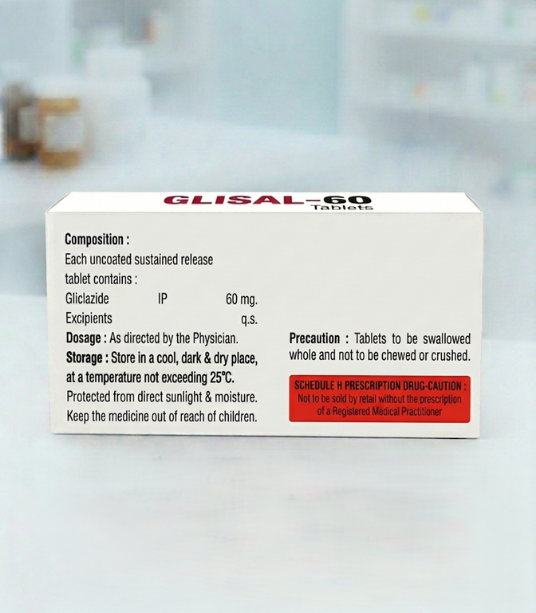


GLISAL 60
GLISAL 60 (Gliclazide 60 mg SR) is a once-daily, sustained-release oral medication for Type 2 diabetes. It works by increasing insulin release from the pancreas, helps control blood sugar throughout the day, and is most effective when taken with breakfast. Patients should be aware of the risk of low blood sugar, take it consistently, and avoid crushing the tablet.
1. The Mechanism of Action
GLISAL 60 (Gliclazide 60 mg SR ) works by directly stimulating the pancreas to produce more of its own insulin.
- Insulin Secretion: It binds to specific receptors (SUR1) on the beta cells of the pancreas. This closure of potassium channels triggers a flow of calcium into the cell, which essentially “squeezes” the pancreas to release insulin into the bloodstream.
- Restoring the “First Phase”: In Type 2 diabetes, the body often loses the “first phase” of insulin release (the immediate burst right after eating). Gliclazide helps restore this early peak, which is critical for preventing high blood sugar spikes after meals.
- Extra-Pancreatic Effects: Emerging evidence suggests Gliclazide may also improve how sensitive the peripheral tissues (like muscles) are to insulin, though its primary job remains insulin production.
2. The “Sustained Release” (SR) Technology
The “SR” (or sometimes MR for Modified Release) technology is what makes the 60 mg dose distinct:
- The Hydrophilic Matrix: The tablet is composed of a cellulose-based matrix. When it enters the digestive tract, it turns into a gel.
- Linear Release: The medication is released slowly and steadily as the gel erodes. This ensures that the drug levels in your blood don’t “peak and valley,” which provides more stable glucose control throughout the day and night.
- Once-Daily Convenience: Because it lasts 24 hours, it is almost always prescribed as a single dose in the morning.
3. Why the 60 mg Dose is Specific
The 60 mg SR tablet is often considered a “breakthrough” dose or a midpoint in therapy.
- It is equivalent in efficacy to taking two 30 mg SR tablets..
- The 60 mg dose is frequently used for patients who need more intensive control than the starting 30 mg dose provides, but who may not yet require the maximum dose (usually 120 mg SR).
4. Administration Rules
- Timing: It should be taken at breakfast. Taking it in the morning ensures the medication is most active during the day when you are eating, while its levels naturally taper off slightly during the overnight fast.
- No Crushing: Like all SR medications, the tablet must be swallowed whole. Crushing, chewing, or splitting the tablet (unless it is a specifically designed breakable SR tablet) destroys the slow-release matrix, leading to “dose dumping,” which can cause dangerously low blood sugar.
- Consistency: It must be taken at the same time every day to maintain the 24-hour steady state.
5. Potential Side Effects
- Hypoglycemia (Low Blood Sugar): This is the most significant risk. Because Gliclazide forces insulin release, if you skip a meal or exercise excessively without eating, your blood sugar can drop too low. Symptoms include sweating, shakiness, confusion, and palpitations.
- Weight Gain: As a side effect of increased insulin levels (which is an anabolic or “building” hormone), some patients may experience mild weight gain.
- Gastrointestinal: Though less common than with Metformin, some may experience nausea, indigestion, or constipation.
6. Key Precautions
- Alcohol: Alcohol can prolong the hypoglycemic effect of Gliclazide and should be consumed with extreme caution, as it interferes with the liver’s ability to release emergency glucose.
- Kidney & Liver Function: Gliclazide is primarily metabolized by the liver and excreted via the kidneys. Significant impairment in either organ requires careful dose adjustment or a change in medication.
- Sulfonylurea Allergy: This medication should not be used by individuals with a known allergy to sulfonamides (sulfa drugs).