Login
Login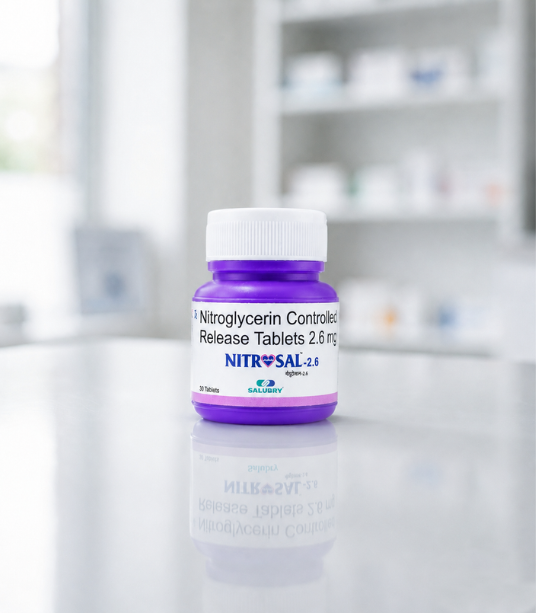
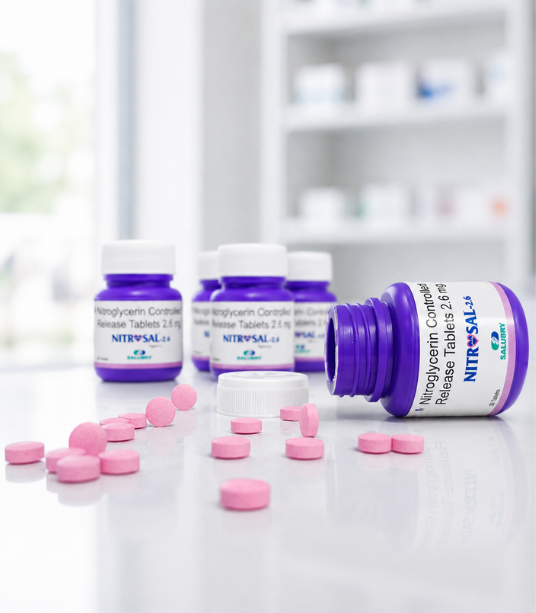

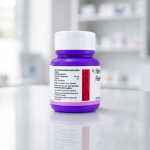

Nitrosal 2.6
NITROSAL 2.6 (Nitroglycerin 2.6mg) is a sustained-release (SR) oral formulation of a potent vasodilator used primarily for the long-term prophylaxis (prevention) of angina pectoris (chest pain) caused by coronary artery disease.
Unlike the sublingual tablets or sprays used for emergency relief, the 2.6mg sustained-release tablet is designed to provide a steady, continuous supply of medication to the bloodstream to keep blood vessels relaxed over several hours.
1. Mechanism of Action: The Nitric Oxide Pathway
Nitroglycerin is a “nitrate” that acts as a donor of Nitric Oxide (NO), a naturally occurring signaling molecule in the body.
- Conversion: Once ingested, nitroglycerin is converted into nitric oxide within the smooth muscle cells of the blood vessel walls.
- The Relaxation Cascade: Nitric oxide activates an enzyme called guanylate cyclase, which increases levels of cyclic GMP. This causes the smooth muscles to relax.
- Venous Dilation (Preload Reduction): At the 2.6mg dose, its primary effect is widening the veins. This allows more blood to “pool” in the legs and body, meaning less blood returns to the heart. This reduces the workload on the heart muscle.
- Arterial Dilation (Afterload Reduction): It also relaxes the arteries, making it easier for the heart to pump blood out.
- The Result: By reducing the heart’s workload and oxygen demand, it prevents the oxygen “shortage” that causes chest pain.
2. The Sustained-Release (SR) Profile
The 2.6mg strength is specifically engineered for a “slow-drip” effect:
- Controlled Release: The tablet is manufactured to release the active drug gradually into the gastrointestinal tract.
- Prophylactic Use: It is not effective for stopping an acute angina attack that has already started. Its job is to reduce the frequency and severity of future attacks.
3. Pharmacokinetics & The “Nitrate Tolerance” Challenge
| Feature | Details |
|---|---|
| Absorption | Well-absorbed from the GI tract, but undergoes heavy “first-pass” metabolism in the liver. |
| Duration | The effect typically lasts for 8 to 12 hours. |
| The Tolerance Phenomenon | If nitrates are in the blood 24/7, the body becomes “immune” to them. To prevent this, doctors usually prescribe a “nitrate-free interval” (usually 10–12 hours at night) to “reset” the body’s sensitivity. |
4. Potential Side Effects
Nitroglycerin significantly alters blood flow, which can lead to specific side effects:
- Nitrate Headache: This is the most common side effect. It occurs because the drug also dilates blood vessels in the brain. These usually decrease in intensity as the body adjusts.
- Dizziness & Orthostatic Hypotension: A sudden drop in blood pressure when standing up, which can lead to fainting.
- Flushing: A feeling of warmth or redness in the face and neck.
- Reflex Tachycardia: Occasionally, the heart may beat faster to compensate for the lower blood pressure.
5. Critical Precautions & Contraindications
- The “ED Drug” Warning (Crucial): Nitroglycerin must never be taken with phosphodiesterase-5 (PDE5) inhibitors like Sildenafil (Viagra), Tadalafil (Cialis), or Vardenafil (Levitra). The combination can cause a catastrophic, life-threatening drop in blood pressure.
- Alcohol: Alcohol can intensify the blood-pressure-lowering effects of nitroglycerin, leading to severe dizziness or fainting.
- Anemia/Glaucoma: It should be used with caution in patients with severe anemia or certain types of glaucoma (closed-angle).
- Storage: Nitroglycerin is sensitive to light and moisture. Always keep the 2.6mg tablets in their original glass container, tightly capped.
6. Administration Guidelines
- Do Not Crush: To maintain the sustained-release mechanism, the 2.6mg tablet must be swallowed whole. Crushing or chewing it could release the entire dose at once, which is dangerous.
- Timing: Usually taken 2 to 3 times a day with a long gap at night to maintain the “nitrate-free interval.”
- Positioning: If you feel dizzy after taking a dose, sit or lie down immediately.
7. Summary Table: Emergency vs. Prevention
| Feature | Sublingual (0.4mg) | Sustained Release (2.6mg) |
|---|---|---|
| Purpose | Stop active angina attack. | Prevent future attacks. |
| Onset | 1–3 minutes. | 30–60 minutes. |
| Administration | Under the tongue. | Swallowed whole. |
Medical Disclaimer: This description is for educational purposes. Nitroglycerin is a high-potency cardiovascular drug. Always follow your physician’s exact dosing schedule and never share this medication with others.