Login
Login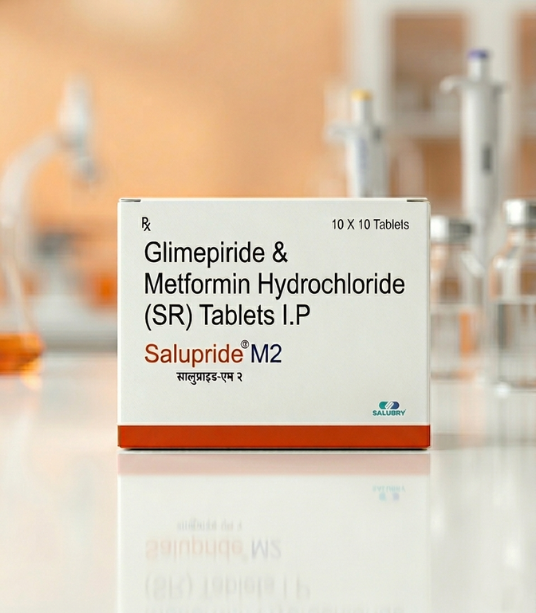

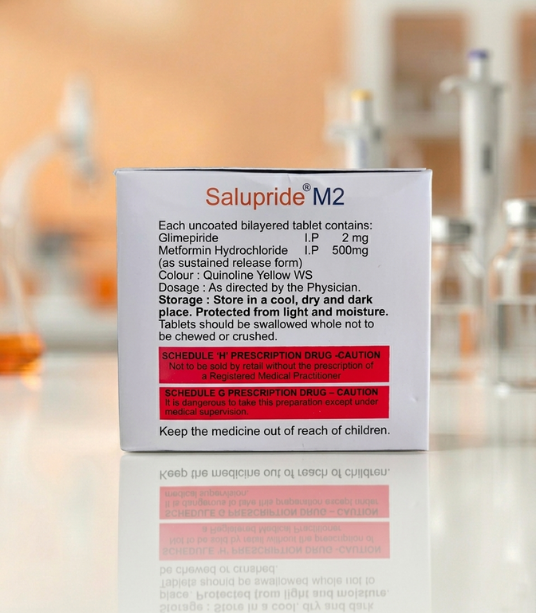


Salupride M2
SALUPRIDE M2 (Glimepiride 2mg and Metformin 500mg) is a moderate-strength fixed-dose combination (FDC) used to treat Type 2 Diabetes. This combination is typically prescribed when the initial “entry-level” dose (1mg/500mg) or Metformin monotherapy fails to bring blood glucose levels within the target range.
At this level, the treatment shifts from a “starting phase” to a “maintenance phase,” providing a more robust response to elevated blood sugar.
1. Synergistic Mechanism of Action
This duo works through a “push-pull” dynamic to control glucose from two different directions:
The “Push”: Glimepiride 2mg
As an insulin secretagogue, the 2mg dose provides a stronger stimulus to the pancreatic $\beta$-cells. It binds to the SUR1 receptors, closing potassium channels and forcing a significant release of insulin. This is particularly effective at lowering postprandial (after-meal) glucose spikes.
The “Pull”: Metformin 500mg
Metformin acts as an insulin sensitizer. It doesn’t force the body to make more insulin; instead, it makes the insulin provided by the Glimepiride work better. It does this by:
- Reducing the amount of sugar the liver pumps into the blood overnight.
- Improving glucose uptake in the muscles.
- Delaying sugar absorption in the intestines.
2. Clinical Rationale for this Strength
Physicians often choose the 2mg/500mg ratio for specific clinical reasons:
- The “Metformin Ceiling” Workaround: If a patient cannot tolerate higher doses of Metformin (like 1000mg or 2000mg) due to stomach issues, adding 2mg of Glimepiride allows for better sugar control without increasing the Metformin dose.
- HbA1c Impact: This combination can typically lower HbA1c levels more effectively than doubling either drug alone, as it addresses both insulin production and insulin resistance.
3. Enhanced Side Effect Profile
With the increase of Glimepiride to 2mg, certain risks become more pronounced:
1. Increased Hypoglycemia Risk: 2mg of Glimepiride is potent. If a meal is missed or delayed, the risk of a “sugar crash” (sweating, palpitations, confusion) is significantly higher than at the 1mg level.
2. Gastrointestinal (GI) Effects: Even at a steady 500mg, Metformin can cause bloating, nausea, or “metallic taste.” However, taking the combination with a full meal usually mitigates this.
3. Weight Neutrality vs. Gain: While Glimepiride can cause slight weight gain (due to increased insulin), Metformin is weight-neutral or may even cause slight weight loss. Together, they often result in a relatively stable weight profile.
4. Critical Precautions
- Renal Monitoring: Because Metformin depends entirely on the kidneys for removal, this medication is usually contraindicated if the eGFR (Estimated Glomerular Filtration Rate) falls below 30 mL/min/1.73m².
- Vitamin B12: Long-term use of this combination may lead to a decrease in Vitamin B12 absorption. Periodic blood tests may be necessary to check for B12 deficiency or anemia.
- The “Meal Sync”: To ensure safety, this tablet must be taken with the first main meal of the day. If you skip breakfast, you should generally wait to take the dose until your next full meal to avoid a dangerous drop in blood sugar.
5. Storage & Handling
- Keep in a cool, dry place away from direct sunlight.
- Store at room temperature (20°C to 25°C).
- Avoid storing in bathroom cabinets where high humidity can degrade the Metformin component.
Medical Disclaimer: This description is for informational and educational purposes only. Always consult with your healthcare provider or pharmacist regarding your specific medication regimen and any potential side effects you may experience.