Login
Login
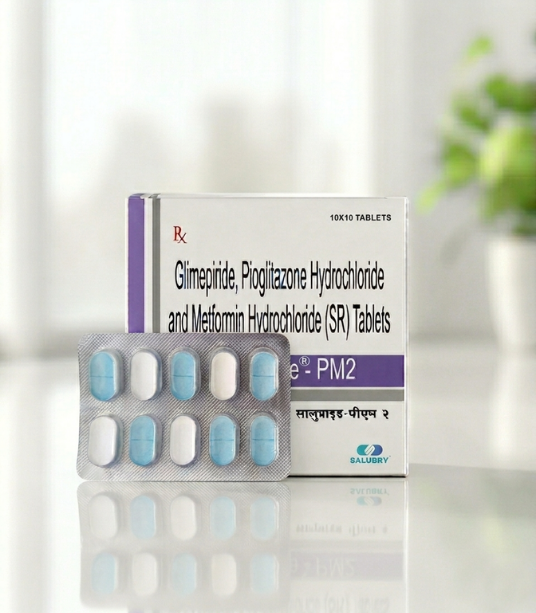
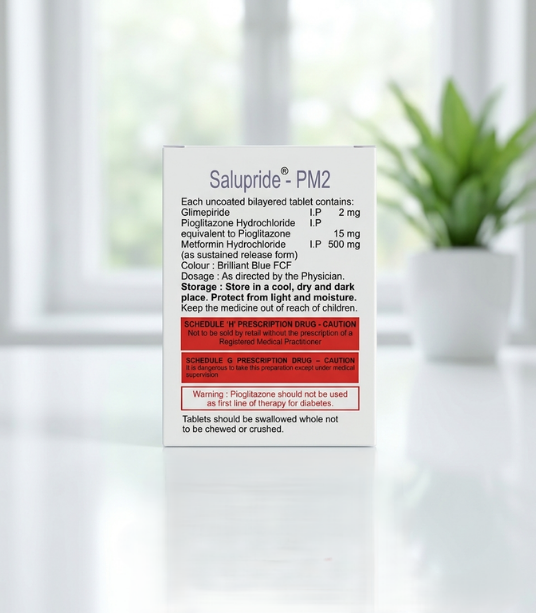



Salupride PM2
The combination of SALUPRIDE PM2(Glimepiride 2mg, Metformin 500mg, and Pioglitazone 15mg) is a powerful triple-drug therapy (often referred to as a “triple FDC”). It is designed for patients with Type 2 Diabetes whose blood sugar remains uncontrolled despite dual therapy.
This “triple attack” targets diabetes through three distinct physiological pathways: insulin secretion, insulin sensitivity in the liver, and insulin sensitivity in the muscles/fat cells.
1. The Triple-Mechanism Approach
This combination is highly effective because each component addresses a different defect of Type 2 Diabetes.
A. The “Trigger”: Glimepiride 2mg (Sulfonylurea)
- Target: Pancreas
- Action: Stimulates the $\beta$-cells to secrete more insulin. It acts as the “immediate responder” to lower blood glucose levels, particularly after eating.
B. The “Sensitizer”: Metformin 500mg (Biguanide)
- Target: The Liver and Muscle.
- Action: Its primary role is to stop the liver from overproducing glucose and to improve the efficiency of the insulin already in the body. It also slightly slows glucose absorption in the gut
C. The “Enhancer”: Pioglitazone 15mg (Thiazolidinedione/TZD)
- Target: Muscle and Adipose (Fat) Tissue.
- Action: It works at the genetic level by activating PPAR-gamma receptors. This makes fat and muscle cells much more “hungry” for glucose, significantly reducing insulin resistance. It has a slow onset but provides very durable, long-term glucose control
2. Clinical Rationale
Using three drugs at lower-to-moderate doses is often more effective than using one or two drugs at their maximum doses.
- Synergy: Each drug covers the “weak spots” of the others.
- Comprehensive Control: It simultaneously addresses insulin deficiency (Glimepiride) and insulin resistance (Metformin and Pioglitazone).
- Stable HbA1c: Pioglitazone is known for providing “glycemic durability,” meaning it helps keep blood sugar stable for longer periods compared to other medications
3. Pharmacokinetics & Timing
| Component | Peak Effect (Tmax) | Metabolism |
|---|---|---|
| Glimepiride | 2–3 hours | Liver (CYP2C9) |
| Metformin | 2–3 hours | Kidney (Excreted unchanged) |
| Pioglitazone | 2–4 hours | Liver (CYP2C8 & CYP3A4) |
Administration: This tablet is taken once daily with the first main meal (breakfast). Taking it with food is mandatory to prevent the Glimepiride from causing a sugar crash and to reduce Metformin’s impact on the stomach.
4. Notable Side Effects & Risks
Because this is a triple-drug therapy, the side effect profile is more complex:
1. Hypoglycemia: The risk is higher because Glimepiride is pushing insulin production while the other two are making that insulin more “potent.”
2. Fluid Retention/Edema: Pioglitazone can cause the body to retain fluid, which may lead to swelling in the ankles or legs
3. Weight Gain: This is a common side effect of both Glimepiride and Pioglitazone. However, the Metformin component helps to partially offset this.
4. Digestive Issues: Metformin may cause mild nausea or bloating initially.
5. Bone Health: Long-term use of Pioglitazone has been associated with a slightly increased risk of bone fractures, particularly in women.
5. Critical Precautions
- Heart Health: Pioglitazone is generally avoided in patients with symptomatic heart failure because it can cause fluid buildup.
- Liver & Kidney Monitoring: Regular blood tests are required to monitor liver enzymes (due to Pioglitazone and Glimepiride) and kidney function (due to Metformin).
- The “Slow Start”: While Glimepiride and Metformin work almost immediately, the full effect of the Pioglitazone component may take 4 to 12 weeks to reach its peak impact on your HbA1c.
Medical Disclaimer: This is a high-potency combination medication. It must be taken strictly as prescribed by a healthcare professional, with regular monitoring of blood glucose and organ function.