Login
Login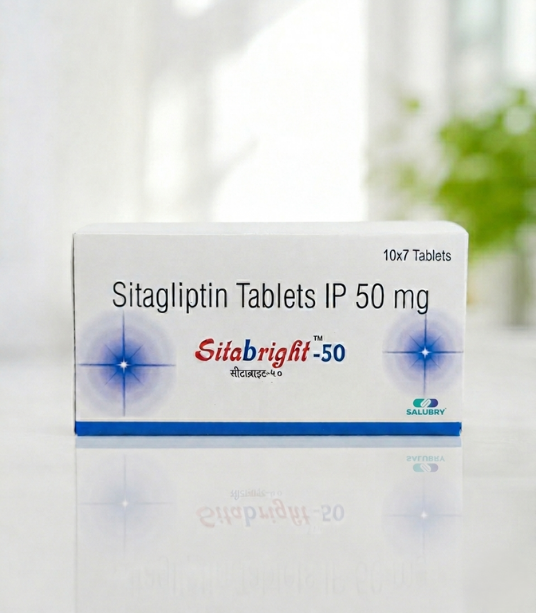

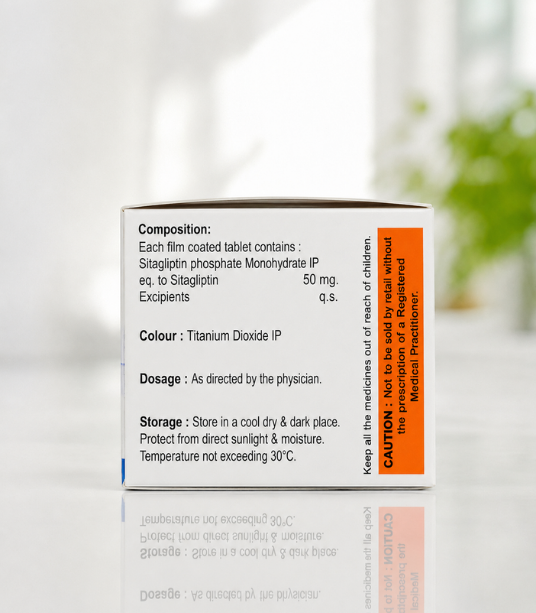


Sitabright 50
SITABRIGHT 50 (Sitagliptin 50 mg ) is a highly selective, oral antidiabetic medication used to manage Type 2 Diabetes Mellitus. It belongs to a class of drugs known as DPP-4 inhibitors (Dipeptidyl Peptidase-4 inhibitors), often nicknamed “Gliptins.”
Unlike older medications that force the pancreas to work constantly, Sitagliptin is “glucose-dependent,” meaning it primarily works only when your blood sugar is high (such as after a meal).
1. Mechanism of Action: The “Incretin Booster”
To understand Sitagliptin, you have to understand Incretins—natural hormones (like GLP-1) that your body releases after you eat to tell the pancreas to produce insulin.
- The Problem: In a normal body, an enzyme called DPP-4 breaks down these incretin hormones very quickly (within minutes).
- The Blockade: Sitagliptin 50 mg “inhibits” (blocks) the DPP-4 enzyme.
- The Result: By blocking the enzyme, Sitagliptin allows your natural incretin hormones to stay active in your blood for much longer.
- The Precision: These hormones then tell the pancreas to release insulin only when blood sugar is high. They also tell the liver to stop making excess sugar.
2. Why the 50 mg Dose?
The 100 mg dose is the standard for most adults, but the 50 mg dose is specifically utilized in two scenarios:
1. Moderate Kidney Impairment: Because Sitagliptin is primarily cleared by the kidneys, doctors prescribe the 50 mg dose for patients whose kidney function (eGFR) is between 30 and 45. This ensures the drug doesn’t build up to toxic levels.
2.Combination Sensitivity: It may be used when starting a patient on multiple medications to see how they tolerate the drug class.
3. Key Clinical Advantages
Weight Neutrality: Sitagliptin does not cause weight gain, which is a significant advantage over sulfonylureas or insulin.
Low Hypoglycemia Risk: Because it only works when blood sugar is elevated, it rarely causes “sugar crashes” (low blood sugar) when used on its own.
Once-Daily Dosing: It has a long half-life, allowing for consistent 24-hour control with a single pill.
4. Administration Guidelines
Timing: It can be taken once daily, with or without food. It is not dependent on meal timing like Metformin or Voglibose.
Consistency: It should be taken at the same time every day to maintain a steady level in the bloodstream.
Missed Dose: If a dose is missed, it should be taken as soon as remembered, but two doses should never be taken at once.
5. Potential Side Effects
Sitagliptin is generally very well-tolerated, with fewer digestive issues than Metformin.
Common: Upper respiratory tract infections (cold-like symptoms), headache, or a sore throat.
Joint Pain: Some patients in this drug class have reported severe or disabling joint pain. If this occurs, the medication is usually stopped.
Skin Reactions: Rare but serious allergic reactions (like Stevens-Johnson syndrome) can occur.
6. Serious Warning: Pancreatitis
A rare but serious side effect associated with DPP-4 inhibitors is acute pancreatitis (inflammation of the pancreas).
Symptoms: Severe, persistent abdominal pain that may radiate to the back, often accompanied by vomiting.
Action Required: If these symptoms occur, the medication must be stopped immediately, and a doctor must be consulted.
7. Precautions
Kidney Monitoring: Since the dose is tied to kidney health, regular blood tests to check eGFR or Creatinine are essential.
Heart Failure: Some studies have looked at the link between DPP-4 inhibitors and heart failure. Patients with existing heart or kidney issues should be monitored for symptoms like shortness of breath or swelling in the ankles