Login
Login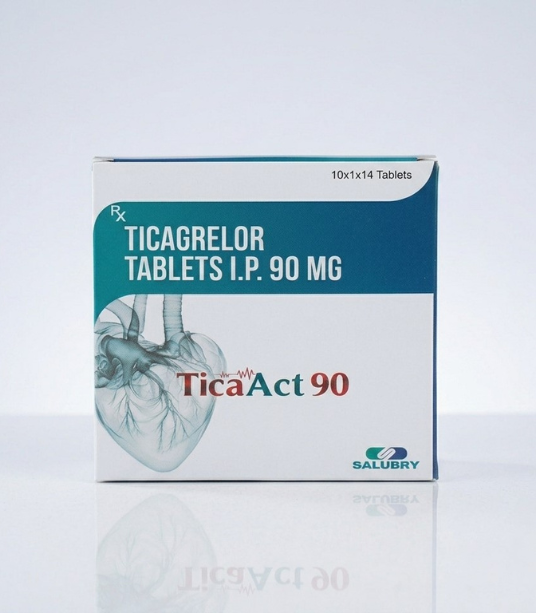


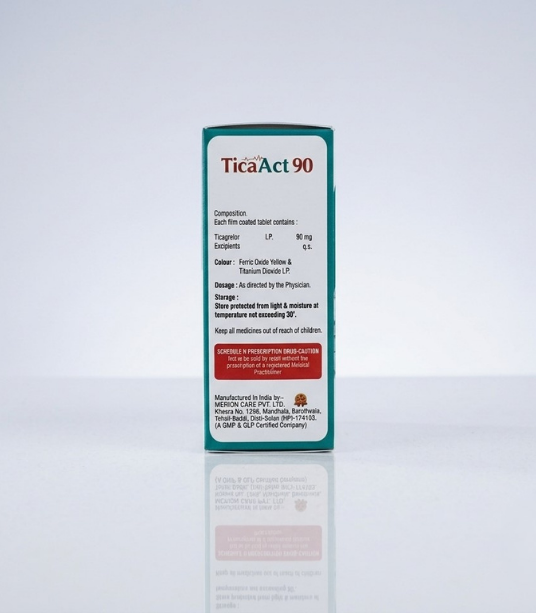




TicaAct 90
TicaAct 90 (Ticagrelor 90mg ) is a high-potency antiplatelet agent belonging to the chemical class of cyclo-pentyl-triazolo-pyrimidines (CPTPs). Unlike its predecessor Clopidogrel, Ticagrelor is a direct-acting drug, meaning it does not require liver activation to begin protecting the heart
The 90mg dose is the standard therapeutic strength used in the “acute phase” following a major cardiac event to prevent the formation of life-threatening blood clots.
1. Advanced Molecular Mechanism
Ticagrelor works by “disarming” platelets, the cells responsible for clotting, through a unique and sophisticated mechanism:
- Direct P2Y12 Antagonism: It binds directly to the P2Y12 receptor on the surface of platelets. This receptor is the “docking station” for ADP (Adenosine Diphosphate), the chemical signal that triggers platelets to clump together.
- Reversible Binding: This is the most significant “deep” characteristic of Ticagrelor. Unlike Clopidogrel or Prasugrel, which bind permanently to platelets, Ticagrelor’s bond is reversible. This allows platelet function to recover faster (within 3–5 days) once the medication is stopped.
- Non-Competitive Inhibition: It binds to a different site on the receptor than ADP itself (allosteric modulation). This means it can effectively “shut down” the receptor even if there is a high concentration of clotting signals in the blood.
- Adenosine Enhancement: Ticagrelor also inhibits the reuptake of adenosine, increasing its levels in the blood. This can lead to additional benefits like vasodilation (widening of blood vessels) and extra heart protection.
2. Clinical Profile & Efficacy
The 90mg dose is a cornerstone of Dual Antiplatelet Therapy (DAPT), usually paired with low-dose Aspirin.
- The “Loading” vs. “Maintenance”: Treatment often starts with a single 180mg “loading dose” followed by 90mg twice daily.
- Superiority in ACS: Clinical trials (specifically the PLATO trial) demonstrated that Ticagrelor 90mg is more effective than Clopidogrel at reducing the rate of death from vascular causes, heart attacks, and strokes in patients with Acute Coronary Syndrome (ACS).
- Stent Protection: It is highly effective at preventing “stent thrombosis”—the formation of a clot inside a newly placed cardiac stent.
3. Pharmacokinetics
| Feature | Clinical Data for 90mg |
|---|---|
| Onset of Action | Rapid; significant platelet inhibition occurs within 30 minutes. |
| Dosing Frequency | Twice daily (BID) due to its reversible binding and shorter half-life. |
| Metabolism | Processed by the liver via the CYP3A4/5 enzymes. |
| Active Metabolite | It has an active metabolite (AR-C124910XX) that is equally potent. |
| Elimination | Primarily excreted via the bile and feces. |
4. Potential Side Effects
Because Ticagrelor is so potent, it carries a specific side-effect profile:
- Bleeding Risk: The most common side effect. This includes easy bruising, nosebleeds, and longer bleeding times from minor cuts. Internal bleeding (GI or intracranial) is a rare but serious risk.
- Dyspnea (Shortness of Breath): Approximately 15–20% of patients experience a feeling of breathlessness. This is usually mild and often resolves on its own, but it is a unique side effect linked to the drug’s effect on adenosine.
- Bradyarrhythmia: It can occasionally cause a slow heart rate or “ventricular pauses,” particularly in the first week of treatment.
- Uric Acid Elevation: It may slightly increase uric acid levels, which can be a concern for patients with a history of gout.
5. Critical Precautions
- The Aspirin Rule: Ticagrelor 90mg works best with low-dose Aspirin (75mg to 100mg). Clinical data showed that high doses of Aspirin (above 100mg) actually make Ticagrelor less effective.
- Surgical Planning: Because the bond is reversible, Ticagrelor should ideally be stopped 5 days before elective surgery to minimize bleeding risk.
- CYP3A4 Interactions: Avoid strong inhibitors (like Ketoconazole or Clarithromycin) and strong inducers (like Rifampin) of the CYP3A4 enzyme, as they can dangerously change the levels of Ticagrelor in the blood.
- Active Bleeding: It is strictly contraindicated in patients with active pathological bleeding (such as a peptic ulcer) or a history of intracranial hemorrhage.
6. Administration Summary
- Timing: Must be taken twice daily (morning and evening). Consistency is vital because the drug’s effect wears off faster than other antiplatelet meds.
- With or Without Food: Can be taken regardless of meals.
- Crushing: For patients who cannot swallow, the tablets can be crushed, mixed with water, and drunk immediately.
Medical Disclaimer: This description is for educational purposes. Ticagrelor 90mg is a high-stakes cardiovascular medication used to prevent life-threatening events. Always follow your cardiologist’s instructions exactly and never stop taking this medication without medical approval, as doing so greatly increases the risk of a heart attack.